
In addition to securing the huge increases in power and water supplies required by labs, transport planning plays a key role in addressing some of the key challenges these developments face, and ensuring that they are efficient and functional buildings aligned with developers’ sustainability goals.
Waste management
In designing operational waste strategies for offices, architects and developers alike know that deliveries come in, and waste in the form of paper and coffee grounds goes out. For a building accommodating life sciences labs, however, there is a little more to consider.
With a much broader range of material and types of waste, including clinical and potentially hazardous waste, being delivered to – and removed from – these sites, life sciences labs need bespoke delivery and servicing strategies to ensure this can be managed without impacting the operation of the wider development, and is safely contained.
In providing detailed forecasts for delivery types and vehicle numbers at an early stage, these strategies can be baked into building designs, ensuring sufficient capacity for deliveries is provided across as few vehicles as possible, and that all waste can be disposed of safely.
Operational emissions
The global urgency to combat climate change has spurred an unprecedented push toward achieving net-zero carbon emissions, both in the construction and operation of buildings. Developments accommodating life sciences, where energy-intensive laboratories and research facilities mean higher operational emissions, need to work harder in other areas to try to meet net-zero requirements. Transport planning must therefore be interwoven and linked with the design to reduce operational emissions for these developments. By encouraging building users to travel sustainably, operational emissions can be reduced significantly.
To do this, sustainable transportation options that align with a development’s net-zero goals must be integrated into the design, and promoted to building users.
The use of public transport and walking, wheeling and cycling should also be encouraged amongst employees to support the overall reduction of carbon emissions of a development. This can be done based on in-depth postcode and data analysis to understand where building users travel from, how they travel, and therefore how to encourage more sustainable and shared means of transport. People who live 50 miles from their place of work are unlikely to cycle all the way, but free access to folding bikes in the office or lab might make the train a more attractive option than the car.
To reduce the emissions of those travelling by car, the provision of electric vehicle charging stations, priority parking for electric and hybrid vehicles, and incentivized carpooling programs can collectively contribute to reducing the carbon impact of the transportation associated with a facility.
In addition to supporting a net-zero development, this can support health and wellbeing agendas, sustainability targets, staff attraction and retention, and improving the amount of space on site available for alternative uses.
By considering delivery and waste strategies and opportunities for building users to travel sustainably at early design stages, we can design buildings that are truly flexible, and operate smoothly and sustainably under the demands of these cutting-edge spaces.
In 2022, the Department of Housing, Local Government and Heritage and the Department of Rural and Community Development jointly published Town Centre First, a new policy approach for Irish towns and villages in the wake of the COVID-19 pandemic. The long-term vision of the policy is to “create town centres that function as viable, vibrant and attractive locations for people to live, work and visit, while also functioning as the service, social, cultural and recreation hub for the local community.” This new policy approach has been complimented by the provision of funding to local authorities, in order to tackle the challenges of vacancy, car-dominance, and lack of vibrancy faced by many regional Irish urban centres. So what has Momentum’s experience been in this urban revival?
Creating spaces for people
Ireland’s towns and villages have lacked high quality public realm and pedestrian connections, instead prioritising ease of movement and parking for private vehicles. Momentum has rationalised how transport can contribute to creating a more human-centred urban experience. In Dunleer, together with BDP architects and Louth County Council, Momentum identified opportunities to make transport more sustainable, accessible, and safer for all users. Public consultation was at the core of this work, providing both local and national stakeholders the opportunity to shape their future transport and mobility experience. We made recommendations including improved pedestrian comfort and safer crossing points, which are highly transferrable across all of our typical work and highlight the value that public input can bring, across all developments, no matter their size or scale.
Bespoke transport planning
As Ireland continues to develop its catalogue of transport-related policy and guidance, Momentum has engaged in extensive bespoke and first principles transport analysis. This work involves the adaption of both Irish documents and the interpretation of non-Irish documents in a local context. Colbert Quarter in Limerick city provided the perfect opportunity to explore this work approach, with a concise set of transport inputs required for a complex and expansive site. Momentum developed a set of bespoke analysis tools, including a trip generation and transport specification, which contributed to a Delivery and Servicing Plan and the site masterplan. Flexibility in terms of work approach is something we should be striving to achieve in order to bring added value to the transport outputs produced.
Future-proofed transport solutions
A key aspect of Ireland’s urban renewal has been future-proofing transport infrastructure and non-vehicle mobility. This has given Momentum the opportunity to explore and propose novel and forward-thinking transport solutions. Ennis 2040 was one such project, with Clare County Council being presented with suitable locations in the town for Park & Stride locations, the aim of which are to allow town centre regeneration which is pedestrian-oriented. Solutions such as this provide an important reminder of the constant need for innovation and the potential to develop more revolutionary transport and mobility solutions.
All in all, Momentum’s experience in Ireland perfectly exemplifies our core value of placing people at the core of the transport and mobility work which we carry out, while also challenging us to continuously adapt and propose improvements as a company, and as individuals.
Click here to read more about Momentum’s work across Ireland.


How could mobility hubs be used to help bridge this gender gap?
Mobility hubs seek to bring together different modes of transport, such as shared transport, public transport and active travel, in one location. They make it easier for people to change between modes, see and access different sustainable transport options, and provide improvements to public spaces. Mobility hubs can be used as tools to address gaps and barriers to sustainable travel modes. Therefore, when considering barriers that women face to active travel, mobility hubs could consider the below in their design and location to better address women’s mobility needs:
- Integration with public transport and live travel information – Many of us feel vulnerable when we wait for a connecting service or walk places we don’t know. Mobility hubs minimise waiting times and walking distances between interchanges and destinations therefore enhancing sense of safety, with different sustainable transport options for the first/last mile of women’s journeys.
- Location – Mobility hubs should be located close to protected cycle infrastructure and well-lit routes to help address women’s safety concerns related to cycling and travelling at night. Locations should have natural surveillance and be close to final destinations to support women’s journeys, such as residential areas, schools and neighbourhood centres.
- Diversity of bikes and scooters – Women on average have a greater share of caring responsibilities, from looking after children to helping elderly relatives with their food shopping. These are hard to undertake on shared bikes and scooters which are primarily designed for males and commuting with small front baskets or no storage provision. Including shared cargo bikes, and bikes and scooters with larger storage baskets and child seats at mobility hubs would better respond to women’s needs, and raise the visibility of non-commuting travel and women cycling.
- Reserving cycles and parking spaces – particularly at night and for non-standard cycles. This would remove concerns related to not being able to find a docked parking space close to a destination, which can impact women’s personal safety if they have to search a wider area, parking in less secure areas with potentially longer walks to their destination. A guaranteed space at a dock or mobility hub of choice would help to provide a greater sense of security and safety for women.
- Integrated ticketing – women’s travel behaviour is different to men, often involving different modes of transport and trip chaining (multi-stop journeys), which can lead to higher travel costs for women. Smart and integrated ticketing across different modes, for example, via Mobility-as-a-Service (MaaS) which combines all transport information and payment into a single application, would reduce this financial disadvantage and encourage multi-modal travel at mobility hubs.
Mobility hubs could therefore help to better respond to women’s mobility needs and provide important linkages between sustainable modes in local contexts. This would help to support more women into active travel and in creating more inclusive and sustainable cities that benefit us all.
[1] https://www.sustrans.org.uk/media/10527/sustrans-2021-walking-and-cycling-index-aggregated-report.pdf
[2] Women’s Night Safety Report (li.me)


Refurbishing existing buildings offers a huge opportunity to reduce carbon and over the past two years we’ve seen an increase in the number of developers who want schemes to be reused as much as possible to meet planning policy requirements, as well as their own environmental, social and governance (ESG) objectives.
At the same time, refurbishment brings a range of transport challenges. Older buildings are likely to have service yards which are no longer fit for purpose, structural issues such as columns which can’t be moved, or car parks which are too small for modern vehicles, to name a few of the issues.
The main challenge is the conflict between retaining an existing building and the preference for off-street deliveries and loading, together with the need for significant levels of cycle parking. We’ve found this challenge can be solved in many different ways and requires dynamic thinking.
Creating a dual-purpose space
One solution for off-street deliveries is to use vehicle lifts. Maintenance and contingency for when vehicle lifts are otherwise ‘out-of-service’ has deterred their more widespread use in the past, but with new technology and contingency designed in they can prove to be an ideal solution in confined spaces.
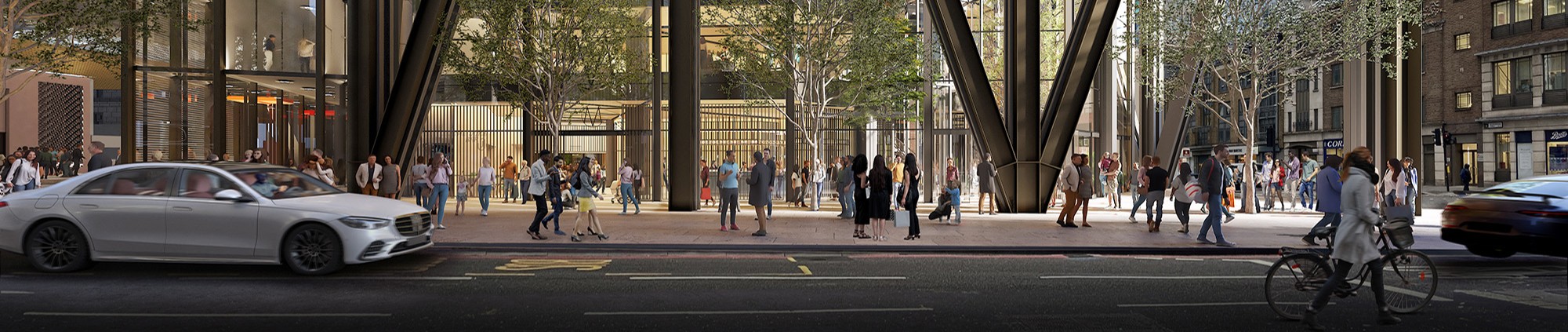
We recently worked on bespoke servicing access solutions for projects at 55 and 85 Gracechurch Street in the City of London. These sites have traditional basement floor service yards with non-traditional ground floor access and we recommended using two types of vehicle lifts, which are virtually hidden from view during the day and pop up or can be driven onto when they are needed for overnight servicing. This results in significant space saving for vehicle access and delivers prime public realm space with the potential to be used for other purposes.
The benefit of the ‘hidden’ vehicle lifts is that during the day there is a space that’s usable for the public realm, such as market halls or food vans. This is far more aesthetically pleasing than a service yard, and it means the space can be let out to generate income.
It’s a concept which has been well received in the City of London. The projects recently successfully passed through the planning process and there is interest from other developers and from the planning authority to see if similar schemes could work at other sites. To date, we have implemented these innovative solutions for redevelopment projects but as refurbishment projects are more increasingly common, we expect that this type of thinking will be prudent for the right site.

Different ways of doing deliveries
In other projects we have looked at ways to reduce the number or type of vehicles that need to use loading bays.
At one building, where the off-street loading bay is compromised, we are targeting 75% of last mile deliveries being made by cargo bike instead of vans, for example. The project has been granted planning permission and the concept of using cargo bikes was well received by the local authority.
Some local authorities in London are already stating the maximum number of vehicles that can come to a site on a daily or weekly basis and are stipulating that a certain amount of deliveries to a site goes through a consolidation centre (meaning that multiple deliveries are consolidated onto a single vehicle before they reach central London) – driving the agenda to reduce vehicles in city centres. Whilst the stipulation of maximums is not a new concept, the key difference now is that these restrictions are being inserted into the Section 106 planning agreement – providing a stronger legal framework to ensure the development implements the operating conditions.
Cycle parking solutions
Today’s standards for cycling parking can be a challenge on a refurbishment scheme with a basement that was built in the 1960s, 70s or 80s. Depending which assumptions you use, you could be providing 25% to 40% cycle mode share.
In some cases, such as Portland House in Westminster, we’ve benefited from a large area of redundant car parking which can be turned into cycle parking. In others, we’ve used space-efficient vertical stacked parking systems and lockers for folding bikes.
We carried out research within the City of London across various surveys and have identified that between 6-11.8% of commuting cyclists are currently using folding bikes during commuting peak periods. With the continuing growth in their use and popularity, we would like to see a further allowance for folding bikes (beyond the current 10%) to be considered or provided in the right areas and circumstances – particularly as they are good space savers for constrained and refurbished sites.
But sometimes the solution can be having a sensitive discussion with the authorities to discuss the challenges of refurbishments and whether some leniency can be applied.
We always endeavour to have good relationships with local authorities and we have worked with officers on many different schemes in city centres, which have successfully been through planning approvals.
Overall, in our experience, the environment has a huge role to play in which solution works best. Every site we have worked on in central London has been unique. There is no one-size-fits-all solution for any project we work on and this is especially true for refurbishment projects.


It’s really exciting to see a new piece of infrastructure being built, which very closely follows the principle we love to see of development being focused around excellent access to public transport. Residents of the new homes on the doorstop of this station will have fantastic access to a frequent rail service into central London, with direct access also provided to the centre of Chelmsford, Colchester, Ipswich and Norwich.
The scale of works is mind-blowing, with costs to match – £218m funding was secured from the Government’s Housing Infrastructure Fund (HIF), together with £34m from the South-East Local Enterprise Partnership and the Beaulieu developer, Countryside Zest. It’s an excellent showcase to demonstrate that new development coupled with new public transport infrastructure can happen. Station facilities will include:
- three station platforms
- access to platforms via lifts
- accessible toilets and baby changing facilities
- ticketing facilities
- 500 cycle parking and storage spaces
- bus interchange
- dedicated taxi bays
Construction is set to be completed in December 2025 – I can’t wait to see trains stopping at the new station. I’ll even contemplate whether I can extend the part of my commute I do by bike to travel via the new station – on the odd occasion!


In that respect, residential development might be considered a particularly hard nut to crack. Take a look at most out-of-town housing developments (and some urban developments too) and you’ll find there is either a requirement, or an expectation, to provide (often multiple) car parking spaces for each dwelling.
Inner-city ‘residential park and ride’
We recently worked on a high-level feasibility study for a large residential masterplan. With residential units in the centre of a city well-known for having peripheral park and ride sites, and the developer looking to avoid having car parking in the development, we struck on the idea of ‘reverse park and ride’. Using this approach residents would park their car at a ‘park and ride’ site on the edge of the city and travel by bus to reach their home. Possibly even more appealing in our current economic climate, would be to give residents the option to not own a car at all, but instead to have access to cars via car clubs at the park and ride site. And taking the idea one step further, how many bus journeys could be replaced altogether if we substituted buses with cycle paths and secure cycle parking at the park and ride site?
It’s a different solution which could combine health, climate and economic benefits. For developers this type of thinking could represent a real opportunity to maximise value for money from a development – increasing residential density without having to lose space for car parking. By taking away car parking, which would traditionally be provided within a basement in the city centre, the need to excavate basements could also be removed. Similarly, removing parking spaces at ground level frees up space for public realm or further residential development. Reduced car parking means lower demand which leads to less space being used for roads.
Town to country
Stepping outside of the city centre context, we know that there are challenges. But there are still opportunities for strategic transport thinking.
We’re currently considering strategic residential development, and how we could apply a ‘Center Parcs-style’ approach. Visitors to Center Parcs have very limited access to take a car to their lodge. Once luggage has been dropped, the car is parked in a large, remote (and inconveniently located) car park. As a result the car is used less than usual – it likely sits in the car park for the duration of the stay; it’s sometimes the first time guests at Center Parcs realise how little they miss their car when key amenities are conveniently located. The convenience factor of a car being parked outside on the drive is taken away – in that situation, do we walk or cycle instead if we’re nipping to the shops for a loaf of bread?
So, how might we apply that approach to new residential development?
Continuing the Center Parcs analogy, how could things be different if instead of a leisure complex, a public transport interchange such as a rail station was located at the centre of a masterplan? When we start to think about these kinds of changes, we’re addressing how we might start to take down barriers to our habitual behaviours; when we’re making decisions about how to travel on a longer journey, do we travel five to 10 minutes to get access to our cars – or might we prefer to walk for five minutes to get to a rail station and travel by public transport?
Strategic thinking for strategic sites
Of course, transport planning isn’t quite so simplistic. We’re not only experiencing a ‘climate crisis’ at the moment – we’re also (in the UK) in the midst of a severe housing shortage and a cost-of-living crisis. The overriding need – certainly in southeast England – is to provide more housing, and this unfortunately means it’s easy to continue providing very car-dependent communities. No-one would dispute the need for housing, but we think it’s time to move away from ‘housing at all costs’ towards a balance of taking new ideas and working harder to try and provide developments with less dependency on the car.
At a high level, for strategic sites this requires political will and strategic thinking. It means thinking through the location of a strategic residential development site and placing it close to a rail line, where there might be the potential for a new station and the opportunity to link into public transport networks. It means ensuring that significant infrastructure investment is realised and in place in time for first occupation so that travel habits based around the car do not become established. And, it means coupling with a low-car strategy; putting additional measures in place that make using the car less attractive in combination with offering a great alternative, like a new station and ‘reasonably-priced’ public transport.
It could mean incentivising ultra-sustainable access developments. For example, might the merit of a site located very close to an existing railway station be reflected through the planning process to acknowledge and promote the potential for measures that reduce private car demand?
On a human scale it means thinking about what people really want. We believe that more and more people are looking for the flexibility to be less reliant on their car. We know that there are practical issues to consider in day-to-day life. It’s a big ask for a family with young children, and a carload of pushchairs and shopping, to park a 10-minute walk away from home. But that’s where the detail comes in and we start to consider bespoke strategies, such as occasional access to the front door for say two or three nights per week, or maybe even per month.
It’s all about starting the journey, step by step – looking to try and be more sustainable, to try and improve the quality of lived experience that people have and give people other options that are not reliant upon using private cars, but still give access to the car when needed. And that’s what we mean by ‘turning the dial down’.


A solution in urban centres over the past decade has been to use conventional vehicle lifts to access basement level servicing areas. The downside to these is that they can take up valuable building frontage, restrict pedestrian movements and reduce usable space on the ground floor.
In our recent projects Momentum has been able to challenge this approach by proposing multi-use servicing vehicle lifts, aligning with overnight servicing strategies and the 24-hour city idea that also include proposals for the consolidation of the goods on the vehicles to help reduce the number of vehicles. Drawing inspiration from our work on the British Museum, and using these ideas, we have been able to unlock the potential for pop-up retail, an area for social gatherings or other amenities during the daytime and then as a functional servicing arrangement overnight.

This off-street servicing strategy is different to many standard designs as it avoids the need of a ramp which results in a loss of space at both the ground floor and basement level. A typical solution to avoid ramps has been dedicated vehicle lifts, however both of these result in a permanent loss of building frontage and a loss of permeability for people to access the building and reduce the usable ground floor footprint.
This innovative multi-purpose vehicle lift that Momentum has been proposing allows servicing to happen out of hours overnight, and during the daytime the lift-lid forms part of the public realm – blending in with the rest of the area and allowing people to walk over the lifts. This can provide a flexible space for cultural activities and pop-up markets. When the lifts are in use, the lid of the lifts raises up, to allow a vehicle to drive into the lift, before lowering the vehicle into the basement.
This type of lift has been used internationally and typically been used by museums and for art exhibitions due to the minimal vibrations. For example, in Seoul, South Korea and the Maxim Gorki Theatre in Berlin, Germany. These however tend to be used outside of the building and not integrated into the building’s design.
With urban design and cities under the microscope on how to best utilise space, this solution also ties in with Carlos Moreno’s idea of the 15-minute city where “each square metre should serve many different purposes.” This design innovation enables permeability within developments and allows developers and architects freedom to be more creative and not only improve the feel of a building, but also its efficiency.
Multi-use vehicle lifts are part of three developments that Momentum has supported through to planning approval at 70 Gracechurch Street; 55 Gracechurch Street and 85 Gracechurch Street. The City of London planning and transportation committee for the 55 Gracechurch Street application described it as “a real innovation for the City. An exciting concept…and a groundbreaking concept.” and at 70 Gracechurch Street the committee said of the strategy “…a real game changer in the way large city buildings are serviced and it’s a move away from the barren and large servicing bays which seem to blight a lot of our streets.”
We’re now seeing a rise in planning applications adopting similar approaches to servicing and look forward to working with clients to introduce new ideas that use spaces more effectively, move us towards our sustainability goals and create new places for people.

Effective crowd management is essential for ensuring safety and enhancing the experience of large gatherings. Whether it’s an event, a venue or a public space, proper planning, clear communication, and proactive strategies are crucial.
Safety is the foremost concern in crowd management. By providing clear routes, informative signage and an adequate number of trained staff members, the risk of accidents and confusion can be significantly reduced. Managing crowd densities and ensuring smooth flow allows attendees to enjoy the event without congestion or falls.
Enhancing guest experience is equally important. Well-managed crowds enable attendees to navigate the space easily, find facilities and experience a seamless flow. This creates a positive atmosphere, leading to favourable reviews and increased attendance in the future.
Emergency preparedness is a critical aspect of crowd management. Having a well-defined strategy, including clear communication channels, evacuation procedures and trained staff, is essential to handle urgent situations such as fires or natural disasters. Prompt and organised responses minimise panic and ensure the safety of all individuals present.
Unfortunately, crowd management is often overlooked. This can be due to various factors, including an overreliance or overconfidence in previous experience or ‘business as usual’ operations. Some underestimate its importance due to a lack of experience or understanding. Others prioritise costs and time constraints, considering it an unnecessary investment. However, with the introduction of stricter security measures and emergency preparedness requirements, such as the upcoming ‘Protect Duty’ (aka Martyn’s Law), effective crowd management is paramount.
The Protect Duty, which is expected to come into legislation in the UK in 2023, will likely require venues to employ enhanced security measures and robust emergency preparedness plans for a range of possible incidents. This means that a purely reactive approach to crowd management will no longer be acceptable. Organisers must be proactive and ensure that crowd management plans align with the new requirements to prioritise safety and security.
When developing a crowd management planconsider several key factors:
- Accurately assess the expected number of attendees and their arrival and departure rates to determine appropriate measures.
- Clear communication among event organisers, security personnel and guests is vital to ensure everyone understands their roles and responsibilities.
- Strategically-placed signage and effective wayfinding systems prevent bottlenecks and confusion.
- Attendee comfort should be considered with resting areas, accessible facilities and amenities.
- Adequate staffing is crucial for success, ensuring the smooth execution of the plan and timely response to emerging issues.
Every day our pedestrian and crowd flow modeling and management supports the development of effective crowd management plans that prioritise safety and enhance guest experiences in busy environments, to align with the future requirements of the Protect Duty in the UK and similar requirements around the world.


Through Camden’s STEAM Programme, we had the amazing opportunity to do just this when Ken Hy and Patricia Gambiza, both from our engineering team, visited the nursery children at Brecknock Primary School and Torriano Primary School; and Imran Hamblin, CAD technician and Barnaby Hill, senior consultant in our planning team, visited year 2 children at Torriano Primary School.
Ken writes…
What did you do with the children?
“Both schools had been working on transport-themed STEAM initiatives and reached out to Momentum to lead a fun and exciting transport workshop. We ran the idea of creating cities with the children using recycled material, by drawing out a map of a road and handcrafting the different buildings and amenities that the children may pass on their travels to school.
On the day of visit, it was clear to us that the children loved having visitors which was great to see. They were certainly not shy about asking questions! Patricia and I introduced a little bit about our jobs as civil engineers, specifically in transport. It was important for us that the children were able to relate to us. We were extremely impressed with the level of engagement at such an early age.
We centred the morning around how the children arrived at school and the different transport modes they would use. They shared how they would take the bus, walk, scooter or cycle with their parents. More importantly we spoke about the various places the children would pass on their travels, such as shops, cafes, parks, houses and schools. It was important to show them the importance of all these facilities and how they are all connected. This helped to set the scene for the children to create their ‘mini towns’.
Whilst it was important to let the children use their imagination, it was very impressive to see them logically piece together some key features such as parks, bridges and rivers that make up great cities.”

What feedback did you get?
“The teachers echoed that the children were super engaged and were eager to impress with their building skills. No doubt we spotted a few potential engineers in there! The kids had such a lovely time, so much so that they continued to carefully create drawings, constructions and small worlds after we left.”
How does this align with Momentum’s business?
“Our commitment to society and the environment’ is a cornerstone of our business. We accomplish this in part through our corporate social responsibility, or CSR, activities. At the core of the workshops we got the children to increase their awareness of the built world around them and sustainability; hopefully creating the future innovators in transport!
Through initiatives such as this, we try to help provide equal access for children from all socioeconomic backgrounds to engage in STEAM. Diversity of thought and experiences fosters creative thinking and problem solving. We hope our brief visits serve as inspiration for our next generation, to participate in how we shape our built environments in years to come.”
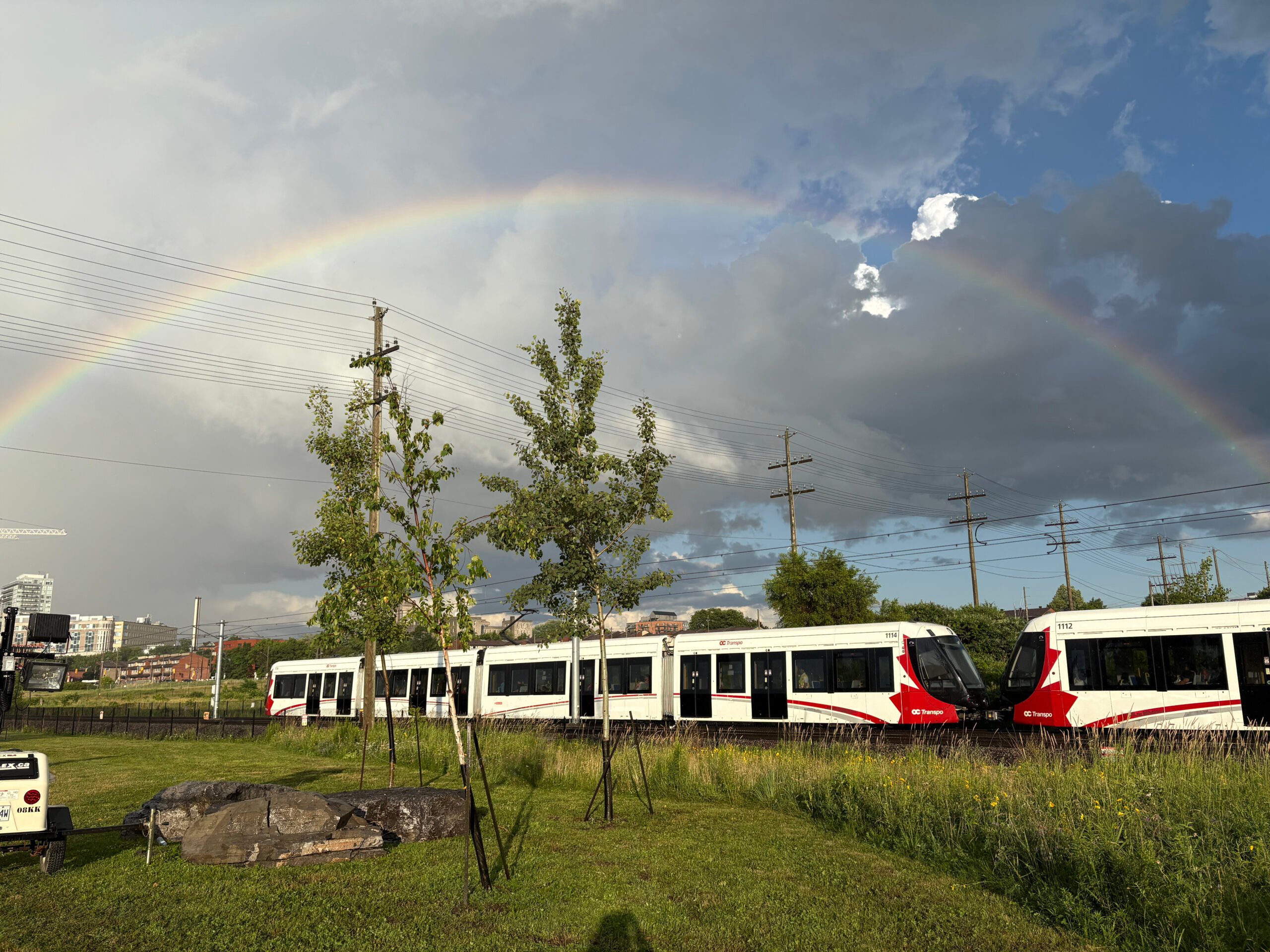
Extreme weather, including flooding, is expected to increase in the coming years. Met Office statistics have reported that England and Wales had its wettest March in over 40 years this year. The future trends also suggest at more fluctuations and variations in rainfall, both across the seasons and UK regions. For instance, climate predictions indicate that rainfall intensity in the summer, in addition to the winter, is likely to be higher than what we experience today.
This puts immense pressure on existing infrastructure to effectively manage and respond to such extreme weather events. And climate and flooding resilience need to be at the forefront of urban planning. Good public realm design practice considers how we can navigate these challenges and the integration of green infrastructure will be key to this, none more so than sustainable urban drainage systems (SuDS). These provide a natural and sustainable approach to managing rainfall and flooding. SuDS can come in many forms, including:
- Rain gardens (green roofs, vertical walls)
- Tree planting systems, including the role of tree canopies in not only capturing rainfall during wet events but also providing shade during hot days
- Permeable paving systems
These solutions all help to maximise the benefits of rainfall and support the natural water cycle, while providing mitigation during extreme weather events. In addition, greening the urban realm provides outdoor spaces for the wellbeing of both people and ecosystems to flourish. They can play a key role in providing public realm spaces which draw people in, resulting in thriving local businesses and communities. The need for greening is recognised nationwide, with significant funding available from the likes of the National Environment Readiness Fund and local boroughs implementing greening strategies and initiatives across their areas.
As part of this, engineers need to move away from the – often easier and historic – route of hard landscaping. The engagement of local communities is also an important consideration in the implementation of SuDS. Giving people a sense of ownership over their local developments will help these areas to thrive in the future, with locals taking pride in maintaining their assets. Consideration of communities is more prevalent than ever with growing and ageing populations to consider.
Striking the balance between ‘place’ and ‘movement’ will also be a vital consideration for how greening dovetails into public realm schemes. A final challenge will be adapting these SuDS systems to existing infrastructure, most notably the cluttered and congested underground apparatus and utilities which are widespread in urban environments.
Overcoming these challenges will greatly help in navigating how the built environment is shaped, and in ensuring that green infrastructure is at the forefront of our urban planning and public realm. This will allow the likes of SuDS and greening to play their key and necessary role as we move towards a more climate-resilient future.
